SOC 2 Type I vs Type II: Cost, Timeline and Differences
Type I tests control design at one date; Type II tests operation over 3 to 12 months. Small startups should budget at least $25,000 for year one.
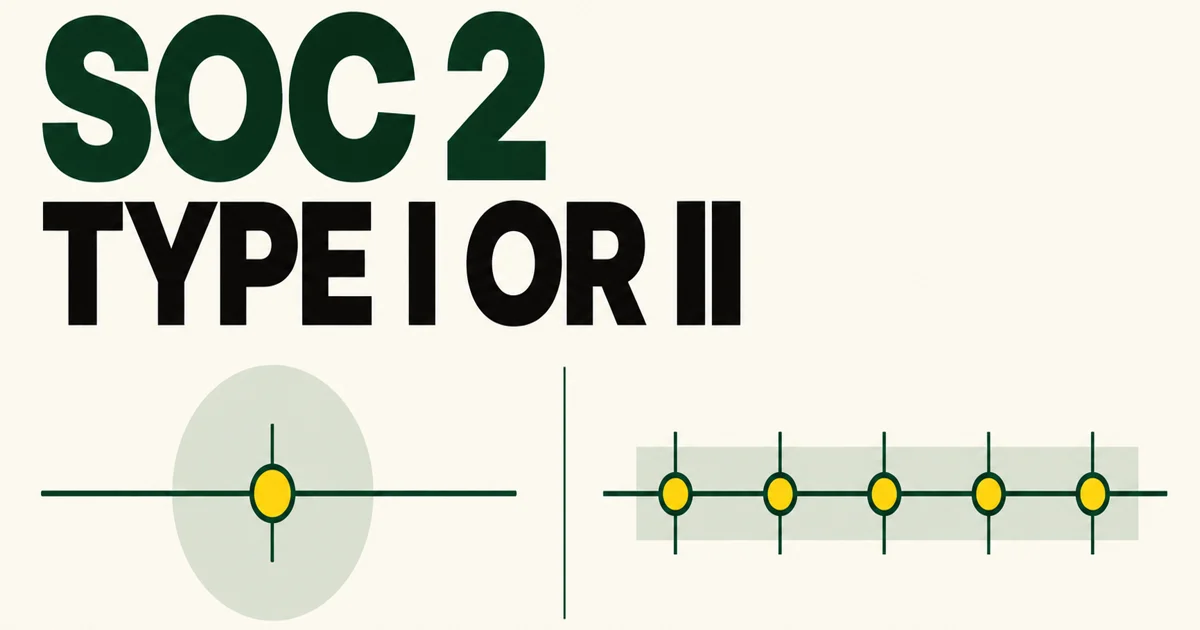
- Type I shows controls are designed at one date. Type II shows they operated over a 3–12 month window.
- A small startup should plan at least $25,000 for first-year audit, tooling, remediation and internal time.
- Ask the buyer whether Type I closes the deal before paying for the shortcut.
SOC 2 is not a software badge. A licensed CPA firm issues an attestation report against selected Trust Services Criteria. Automation platforms collect evidence; they do not replace the auditor or make weak controls effective.
Type I and Type II answer different questions
| Type I | Type II | |
|---|---|---|
| Period | Specified date | Usually 3, 6, 9 or 12 months |
| Tests control design | Yes | Yes |
| Tests operating effectiveness | No | Yes |
| Buyer confidence | Lower | Higher |
| Common first use | Fast initial evidence | Enterprise procurement |
The report date is not the start date
Preparation includes scoping systems, writing policies, fixing access and logging, collecting evidence and selecting a peer-reviewed CPA firm. Vanta estimates another four to six weeks after the Type I date or Type II period end for report issuance. A first Type II can therefore take six to twelve months from the first gap review.
Audit fee is only one line
Drata places a small-company Type I audit around $7,500–$15,000 and Type II around $12,000 to more than $100,000 as scope grows. Its first-year total estimate starts near $25,000 after tooling, readiness, remediation and internal labor. Engineering work on access controls, logging, devices and vendor evidence is often the largest hidden cost.
Type I is useful only if the customer accepts it
A startup can use Type I to show that a control system has been designed and implemented while beginning a Type II observation window. That sequence is rational when a buyer explicitly accepts Type I. It is wasted money when procurement requires a current Type II report.
Control scope drives cost
Security is mandatory; availability, confidentiality, processing integrity and privacy depend on customer promises and scope. Adding criteria, entities, cloud environments or complex subservice organizations expands testing and evidence. Agree on the system description before comparing audit quotes.
The decision
Start with Type I only to unblock a real deal or establish a dated baseline. Plan Type II as the durable objective. Budget the whole program, verify the CPA firm’s peer-review status and schedule backward from the customer’s procurement deadline.